
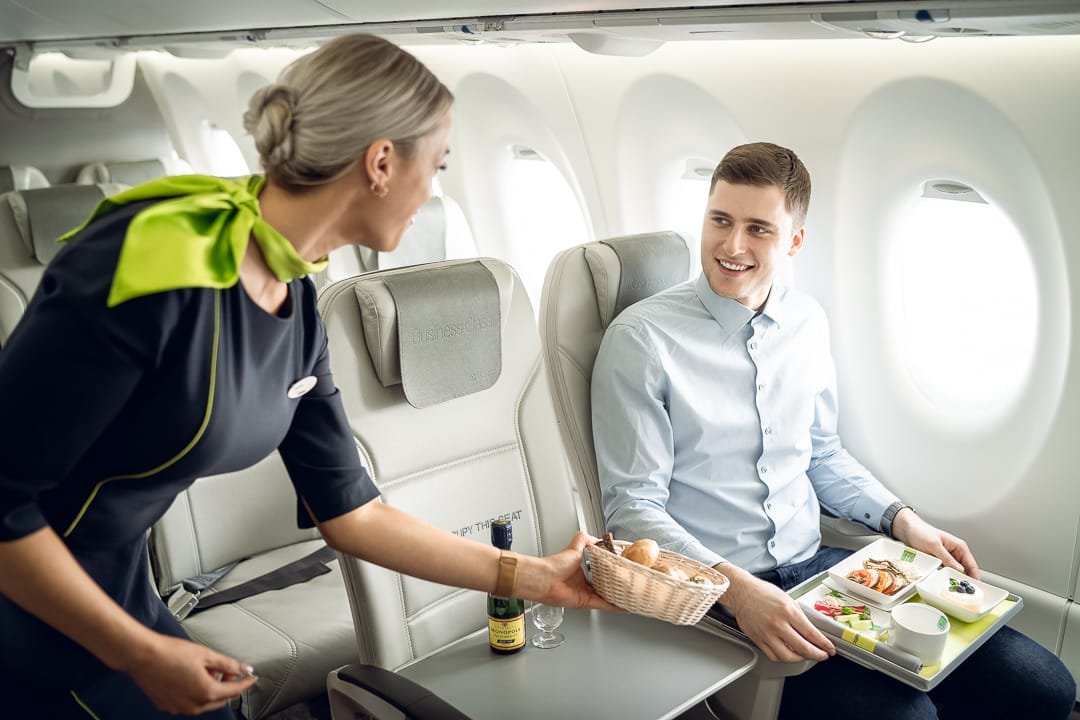
European travel sounds wonderfully effortless until your dream weekend involves two connections, a six-hour airport wait, and a departure time usually associated with bakers and insomniacs. This is where airBaltic becomes interesting. Built around strong connections through the Baltic region, airBaltic flies to more than 80 destinations across the Baltics, Europe and the Middle East, including London, Manchester, Paris, Rome, Barcelona, Dubai and Copenhagen. Rather than trying to make flying unnecessarily complicated, the airline combines a streamlined Airbus A220-300 fleet with several Economy fare choices, Business Class, an app and useful optional extras. For travellers who want to explore Northern Europe or connect through Riga without turning the journey into an expedition, airBaltic deserves a closer look.
airBaltic flights make the Baltics much easier to explore
airBaltic is particularly useful when Latvia, Lithuania or Estonia sits somewhere on your travel wish list. Riga is an important part of the airline’s network, while Tallinn and Vilnius also feature prominently among its destinations. Beyond the Baltics, airBaltic serves an extensive European map that includes Amsterdam, Athens, Barcelona, Berlin, Brussels, Copenhagen, Dublin, Lisbon, Madrid, Milan, Munich, Paris, Prague, Rome, Stockholm and Vienna. UK travellers are covered too, with London Gatwick and Manchester among the airline’s listed destinations. That makes airBaltic especially appealing for city breaks and multi-destination European holidays. Instead of viewing Riga purely as somewhere to change aircraft, travellers can even build a Baltic adventure around it. The network is broad enough to encourage that dangerous holiday-planning habit where one weekend away suddenly becomes four tabs, three countries and a suspiciously ambitious itinerary.
The Airbus A220-300 keeps the airBaltic experience refreshingly consistent
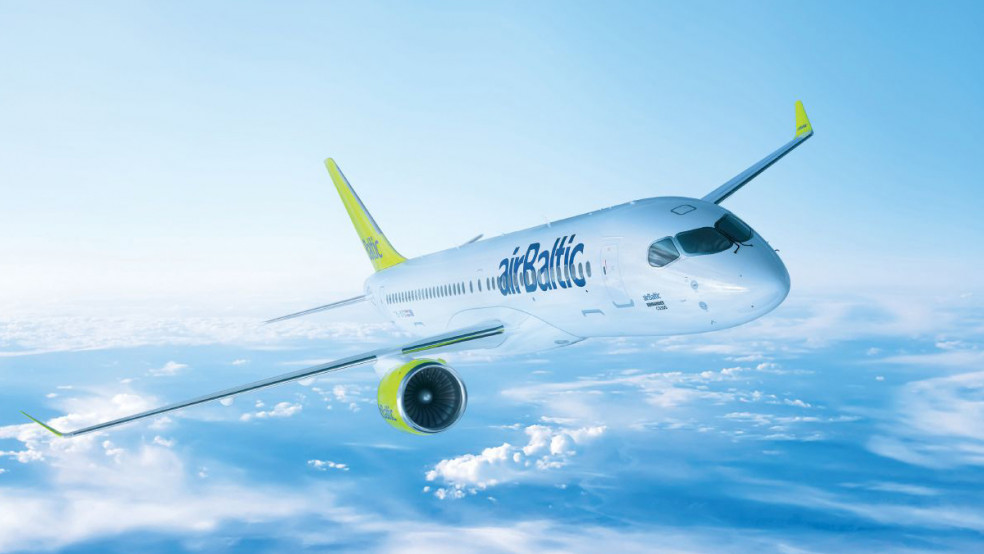
One interesting difference between airBaltic and many larger European airlines is its fleet simplicity. airBaltic operates a single aircraft type, the Airbus A220-300, which the airline highlights for features including wider seats, larger windows and increased cabin storage space. For passengers, a single-type fleet also means the onboard experience can feel more predictable between journeys. The A220 is particularly well suited to the kind of short and medium-haul routes that make up much of airBaltic’s network, so travellers can move between European cities without feeling like the aircraft itself is an afterthought. Naturally, this is still commercial air travel rather than a private lounge floating through the clouds, and comfort expectations should remain realistic. But passengers who appreciate bright cabins, larger windows and a modern aircraft may find the A220-300 a pleasant place to spend a few hours.
Free Starlink Wi-Fi gives airBaltic a genuinely useful onboard advantage
Being disconnected for a couple of hours can sound peaceful until you remember the hotel address is buried in an email and somebody is waiting for your arrival time. airBaltic has a particularly useful answer: free high-speed SpaceX Starlink internet onboard equipped Airbus A220-300 aircraft. The airline says it became the first European carrier to offer the service in February 2025, allowing passengers to browse, message, handle travel arrangements and even join online meetings while flying. This is one of airBaltic’s more meaningful advantages because connectivity has moved from entertaining extra to practical travel tool. You can check transport at your destination, tell family that your flight is progressing normally or deal with work before landing. Nobody is suggesting your holiday flight should become an airborne office, of course. Sometimes using the Wi-Fi to send one message and then stare dramatically out of the window is the healthier choice.
airBaltic Economy fares let travellers choose how much they actually need
airBaltic uses several Economy ticket categories, which means understanding what your fare includes matters before comparing the final cost with another airline. Cabin baggage is a good example. Economy MINI includes one personal item measuring up to 40 x 30 x 15 cm, with a total allowance of up to 8 kg. Economy BASIC, CLASSIC and FLEX include that personal item plus one cabin bag measuring up to 55 x 40 x 23 cm, again with a combined standard allowance of up to 8 kg. Travellers on eligible Economy fares can also purchase a heavier 12 kg cabin allowance, which comes with priority boarding after Business Class. This structure works well for travellers who prefer paying for the services they actually use. The trade-off is equally clear: the cheapest-looking fare may not remain cheapest once luggage, seats and other extras are added, so compare complete trip costs rather than headline fares.
airBaltic Business Class adds comfort where it counts
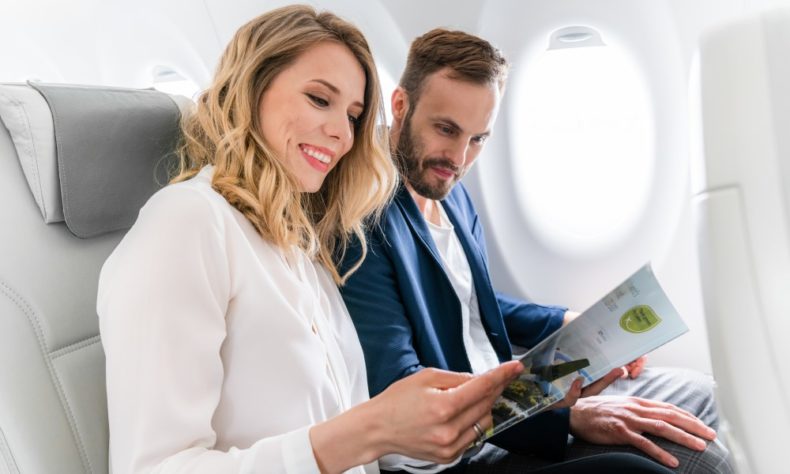
Business Class with airBaltic is aimed at passengers who want a smoother airport experience and more personal space rather than simply a fancier seat label. Benefits listed by airBaltic include dedicated Business Class check-in, Fast Track security where available, lounge access, priority boarding and seating toward the front of the cabin with an adjacent seat kept free for additional privacy. Onboard service includes a seasonal meal and beverages, while Business passengers receive two cabin bags plus a personal item with a combined cabin allowance of up to 24 kg. Checked baggage is also included, with airBaltic listing two checked bags with a combined weight of up to 46 kg for Business Class. For a short European hop, Economy will make more financial sense for many travellers. For business trips, special occasions or connection-heavy itineraries, however, those airport privileges can turn the least glamorous parts of flying into a noticeably calmer experience.
The airBaltic app keeps the boring travel admin in one place
A good airline app should quietly prevent you from digging through screenshots while standing in a boarding queue, and airBaltic’s app is designed around exactly that kind of practicality. It provides access to bookings, check-in, boarding passes, flight notifications and airBaltic Club features, including a digital loyalty card. The airline also provides online information covering flight status, baggage drop-off, boarding groups, Fast Track and transfers through Riga Airport. Self-service baggage drop is available at selected airports including Tallinn, Copenhagen, Berlin, Munich and Zurich, although availability naturally depends on the departure point. These features will not make airport security magically disappear, but they reduce the number of small uncertainties surrounding a trip. Just remember that check-in deadlines vary by airport, so checking the requirements for your specific departure is considerably smarter than sprinting toward a closed desk.
airBaltic hits the sweet spot for flexible European explorers
airBaltic makes the strongest case for travellers who want straightforward access to the Baltics alongside a surprisingly large selection of European and Middle Eastern destinations. Its network of more than 80 destinations provides plenty of flexibility, while the all-Airbus A220-300 fleet gives the airline a consistent onboard foundation. Free Starlink connectivity adds genuine everyday usefulness, and the choice between different Economy fares and Business Class means passengers can decide whether they want a simple seat or a more polished journey. The main consideration is familiar: always check exactly what your chosen fare includes, particularly when it comes to baggage and optional extras. For city-break fans, Baltic explorers and travellers connecting through Riga, airBaltic offers an appealing balance between practicality and comfort. And if that quick trip to Riga somehow becomes Tallinn, Vilnius and Copenhagen too, well, the route map was always going to be tempting.

Aria Vance
Aria is a vintage curator and thrifting expert with over a decade of experience sourcing designer silhouettes on a budget. She believes every piece of pre-loved clothing deserves a second story.